Clinical Research Jobs India: From Entry-Level to Senior Roles
September 30, 2026
8 min read
The healthcare sector is broadening its scope beyond the confines of hospitals and clinical settings, providing thrilling options to those pursuing careers in medical research, drug discovery, and healthcare revolution.
Clinical Research Jobs India provides an avenue for graduates as well as seasoned professionals interested in exploring medicine, medical devices, and new healthcare solutions.
With positions ranging from novice clinical research aids to senior clinical project managers, a number of career options are available depending on qualifications and experience.
Table of Contents
- What Is Clinical Research?
- Why Choose a Career in Clinical Research?
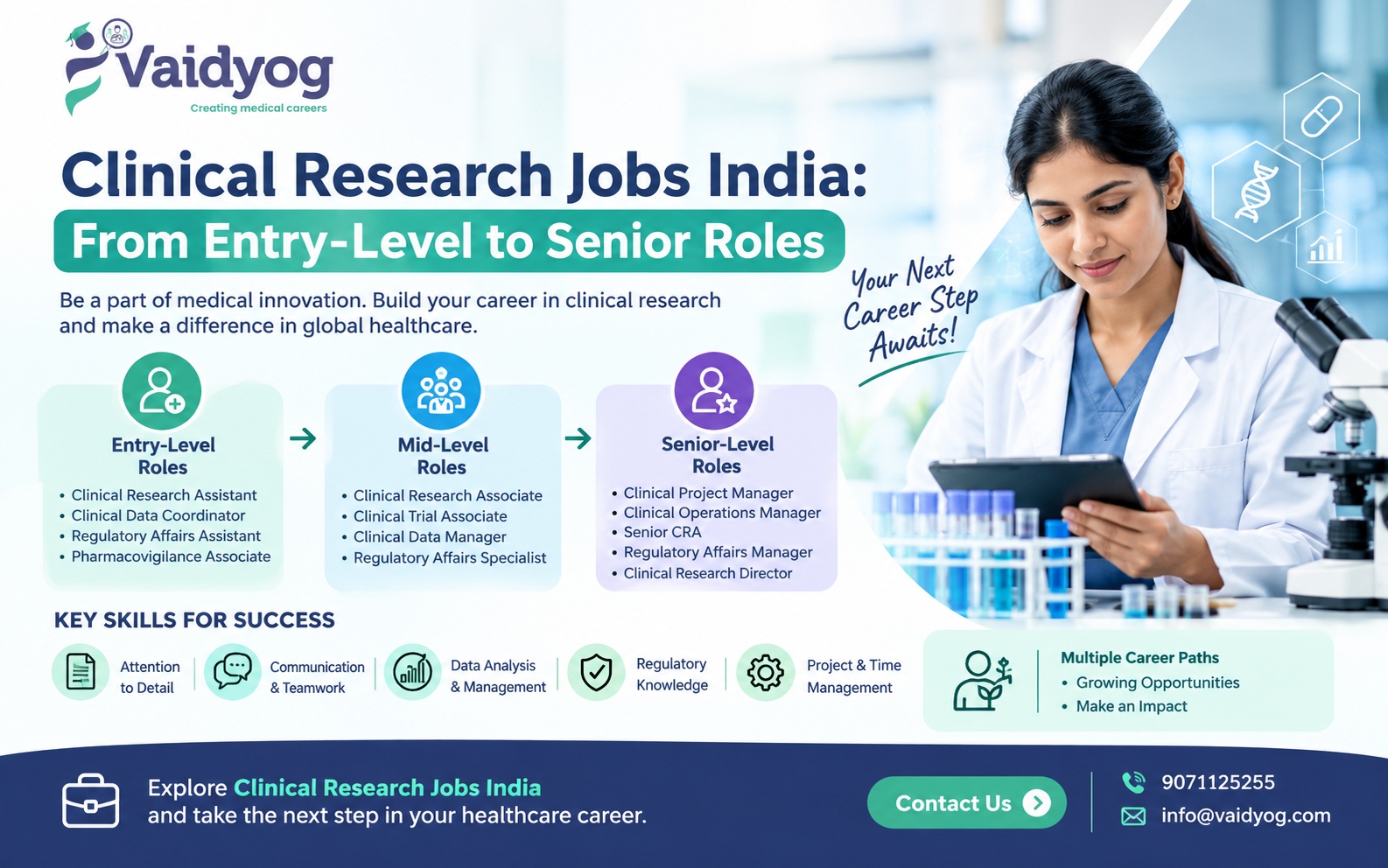
- Entry-Level Clinical Research Roles
- Mid-Level Clinical Research Opportunities
- Senior-Level Career Paths
- Skills Required for Clinical Research Careers
How to Build a Career in Clinical Research
What Is Clinical Research?
Clinical research refers to the examination of medication, therapies, medical equipment, and healthcare techniques in order to learn their safety, efficiency, and usefulness.
Clinical studies are executed in accordance with accepted standards that have been established by regulatory agencies to ensure that results are statistically valid.
Professionals engaged in this practice are employed by hospitals, drug companies, biotechnology firms, contract research firms, and research institutions.
Why Choose a Career in Clinical Research?
A career in clinical research refers to working at an intersection between too domains- that of health care and research.
One may also gain knowledge in the fields of administering clinical trials, managing data, preparing regulatory documentation, ensuring patient safety, and understanding research processes etc.
In this area of work, there are several career paths open to professionals moving from working in operations to working in communications, management, regulatory affairs, and research.
Entry-Level Clinical Research Roles
Graduates have many opportunities to start working in entry-level positions. Some of the jobs are listed below.
Clinical Research Coordinator: Helps organize and monitor clinical trials at participating sites.
Clinical Research Assistant: Performs clerical and administrative tasks in research.
Clinical Data Coordinator: Takes care of collecting, analyzing, and preserving data from the clinical trials.
Regulatory Affairs Assistant: Aids in regulatory compliance and documentation.
Pharmacovigilance Associate: Deals with safety data regarding medicine.
The employers will appreciate applicants with backgrounds in life sciences, pharmacy, nursing, bioengineering, and other related fields.
In addition to such knowledge, some positions might require candidates to have strong communication, organization, documentation, and analytical skills.
Mid-Level Clinical Research Opportunities
Professionals with experience can increase their level of responsibilities in the field of clinical trial operations. They can occupy such positions as Clinical Research Associate, Clinical Trial Associate, Clinical Data Manager, and Regulatory Affairs Specialist.
The role of Clinical Research Associate implies the responsibility for supervising clinical trial sites, assessing the research documentation, and working closely with research teams.
Clinical Data Managers are responsible for managing the data collected during clinical trials, while regulatory experts help to ensure compliance of the submissions and processes with the requirements.
At this stage of a career it is crucial to keep learning, as the field of clinical research is always developing.
Senior-Level Career Paths
The position of Clinical Project Manager, Clinical Operations Manager, Senior Clinical Research Associate, Regulatory Affairs Manager, or Clinical Research Director are positions that advanced professionals can hold.
The roles of these senior professionals involve coordinating with various teams, managing projects, budgets, reporting to stakeholders, and making important decisions.
Good leadership, project management skills, field knowledge, and overall experience are critical for carrying out the duties.
Skills Required for Clinical Research Careers
Acquiring proper skills can assist candidates in getting ready for future prospects in their area of expertise. Key competencies include:
Knowledgeable about how clinical trials work
Good documentation and communication skills
Understanding of research ethical issues
Data management and analysis capabilities
Attentiveness to details
Project and time management
Ability to solve a problem
Teamwork
Having appropriate credentials or training would make it easier for specialists to gain knowledge about clinical studies.
How to Build a Career in Clinical Research
Start by identifying the kind of position that reflects your qualifications and career aspirations. Understand more about clinical trials terminology, procedures, documentation, and regulations.
Internship, academics, research experience, and entry-level positions can provide you with ample knowledge. As you gain experience, you may opt for specialization in clinical functions or other fields such as data management, pharmacovigilance, or regulatory affairs.
For those searching for Clinical Research Jobs India, having an impressive resume, acquiring relevant skills, and monitoring job openings in healthcare and pharmaceutical sectors is advisable to ensure good career opportunities.
Conclusion
Clinical research as an industry presents a wide range of career options including entry-level research support as well as senior management career level positions. A good education, practical skills, competence in technical knowledge, and development in the field can help a candidate develop a career in many areas of the clinical research industry.
It doesn't matter whether one is a recent graduate or a seasoned biotechnologist in the industry, having an understanding of the current roles available along with the related skills is vital for career planning in clinical research.
Frequently Asked Questions
1. What qualifications are needed for clinical research jobs?
The qualifications for different positions will differ. Candidates who hold degrees in pharmacy, life sciences, biotechnology, nursing, medicine, and other similar specializations may work in different positions in clinical research.
2. Can freshers start a career in clinical research?
Absolutely. Fresh grads may be offered entry-level positions as clinical research assistants, clinical trials associates, positions with data, and other jobs depending on specific employer expectations.
3. What does a Clinical Research Associate do?
A Clinical Research Associate can act as a monitor for the clinical trial locations, check the study documents, collaborate with the research teams and make sure that the studies comply with the protocols and standards.
4. Is clinical research a good career option?
Clinical research presents a variety of options in diverse fields such as clinical operations, data management, regulatory affairs, pharmacovigilance, and research management. As for the suitability of careers, it varies from one individual to another, depending on their qualifications, interests, and goals.