How Technology Is Shaping the Future of Radiographer Careers
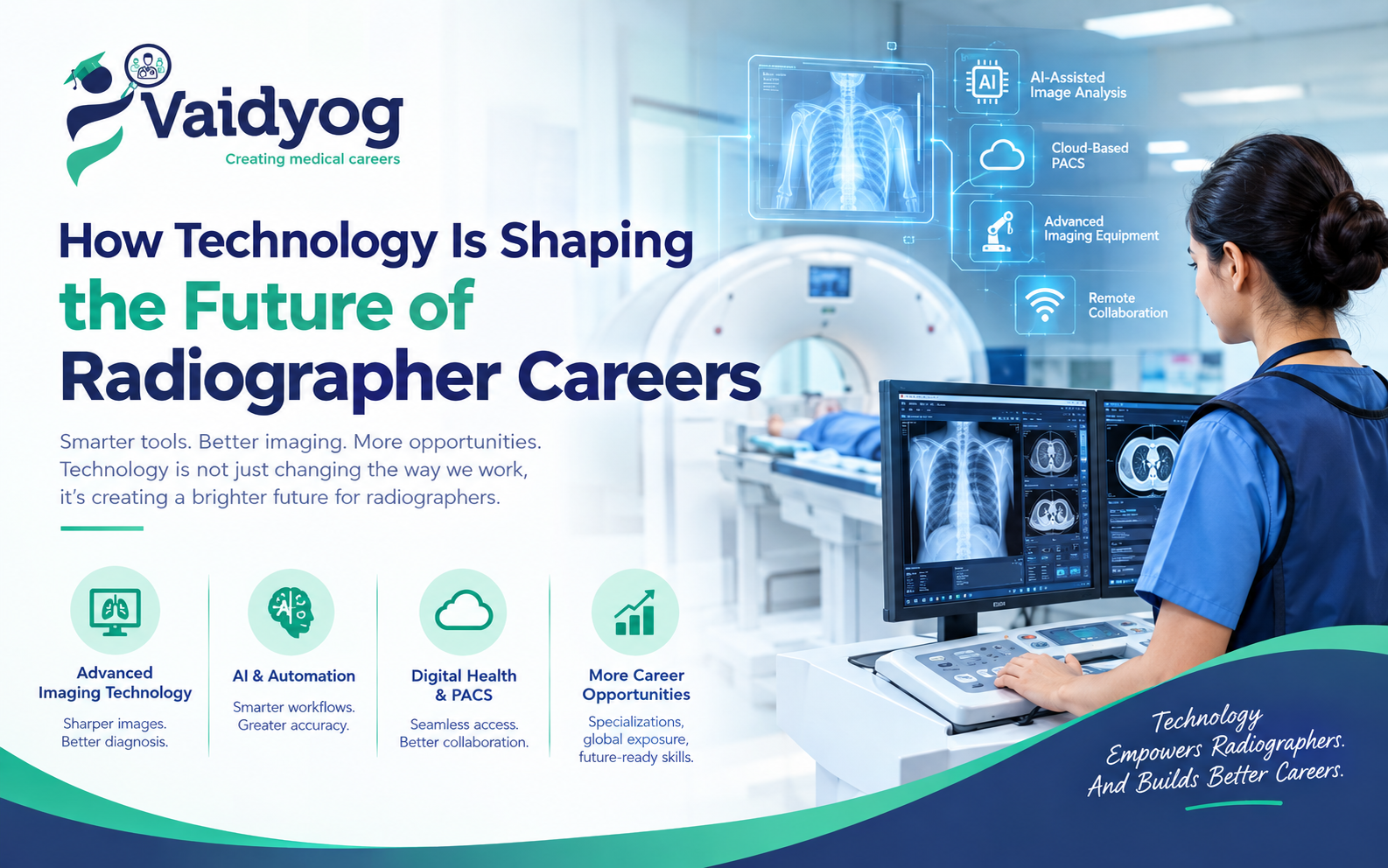
Radiography has become an essential part of modern healthcare, supporting the diagnosis, monitoring, and treatment planning of many medical conditions. With rapid advances in medical imaging technology, the role of radiographers is evolving beyond traditional X-ray procedures.
From digital radiography and CT scans to MRI, mammography, and AI-assisted imaging, modern healthcare facilities are adopting advanced technologies that require skilled professionals. For those exploring radiographer jobs and radiologist jobs, understanding these changes can help identify new career opportunities in medical imaging.
Table of Contents
- The Changing Role of Radiographers
- How Technology Is Transforming Radiography
- Essential Skills for Radiographer Careers
- Radiographer and Radiologist Career Opportunities
- Growing Opportunities in Medical Imaging
How to Build a Future in Radiography
1. The Changing Role of Radiographers
The role of a radiographer has changed significantly with the introduction of advanced imaging systems. Today, radiographers may work with digital X-ray, CT, MRI, mammography, fluoroscopy, and other diagnostic imaging technologies.
Their responsibilities extend beyond operating equipment. Radiographers help prepare patients, follow imaging protocols, position patients correctly, produce quality diagnostic images, and maintain safety standards.
As healthcare technology continues to develop, professionals need to keep their knowledge and technical skills updated.
2. How Technology Is Transforming Radiography
Technology is creating new possibilities across medical imaging. Digital radiography has improved image acquisition and workflow, while CT and MRI technologies provide detailed views of internal structures.
Artificial intelligence is also becoming increasingly relevant in medical imaging. AI-based tools can assist healthcare teams with image analysis, workflow support, and identification of certain imaging patterns.
However, trained healthcare professionals remain important for patient interaction, imaging procedures, quality control, and clinical decision-making.
These developments mean that modern radiographers need to be comfortable working with evolving technologies and digital healthcare systems.
3. Essential Skills for Radiographer Careers
A successful radiographer combines technical knowledge with patient-care abilities. Some important skills include:
- Knowledge of diagnostic imaging equipment
- Radiation safety and protection
- Patient positioning and communication
- Image quality assessment
- Understanding of imaging protocols
- Digital and healthcare technology skills
- Ability to adapt to new equipment
- Teamwork and communication
- Attention to detail
Continuous education and practical experience can help professionals stay prepared for changes in medical imaging.
4. Radiographer and Radiologist Career Opportunities
Radiography offers several career paths depending on qualifications, specialization, and experience.
Professionals can explore roles such as:
- Radiographer
- X-Ray Technician
- CT Technologist
- MRI Technologist
- Mammography Technologist
- Diagnostic Imaging Technologist
- Radiologist
It is important to distinguish between these roles. Radiographers and imaging technologists are generally involved in performing imaging procedures, while radiologists are medical doctors who specialize in interpreting medical images and contributing to diagnosis and treatment planning.
Professionals interested in radiologist jobs typically require medical qualifications and specialist training, while radiographer career pathways follow different educational and professional requirements.
5. Growing Opportunities in Medical Imaging
Radiographers can find employment opportunities in hospitals, diagnostic centres, imaging centres, specialty clinics, and other healthcare institutions.
As healthcare providers adopt modern imaging systems, professionals with relevant qualifications and technical expertise may explore opportunities in:
- Diagnostic radiography
- CT imaging
- MRI
- Mammography
- Interventional imaging support
- Specialized diagnostic centres
- Hospital imaging departments
Searching for relevant radiographer jobs in India can become easier when professionals maintain updated qualifications, certifications, experience, and professional profiles.
6. How to Build a Future in Radiography
Building a successful career in medical imaging requires more than technical knowledge. Professionals can focus on continuous learning, specialization, practical experience, patient communication, and technology awareness.
Keeping a professional profile updated can also help recruiters understand a candidate's education, experience, specialization, and skills.
For healthcare professionals looking for new opportunities, specialized healthcare job platforms can provide a convenient way to discover relevant vacancies.
Conclusion
Radiography represents the intersection of technology, precision, and patient care. As medical imaging continues to evolve, healthcare professionals with relevant technical skills, qualifications, and practical experience can explore diverse career pathways.
For professionals searching for radiographer jobs, radiologist jobs, and other healthcare opportunities, Vaidyog provides a healthcare-focused platform to discover relevant job openings and connect with employers.
Frequently Asked Questions
What is the future of radiographer careers?
The future of radiographer careers is closely connected to advances in diagnostic imaging, digital healthcare, automation, and emerging technologies. Professionals who continuously develop their technical and patient-care skills can explore evolving opportunities.
What skills are important for radiographers?
Important skills include knowledge of imaging equipment, radiation safety, patient positioning, image quality, communication, healthcare protocols, and the ability to adapt to new technologies.
What are some common radiographer jobs?
Common roles include radiographer, X-ray technician, CT technologist, MRI technologist, mammography technologist, and diagnostic imaging technologist.
Are radiographer and radiologist the same?
No. Radiographers generally perform diagnostic imaging procedures, while radiologists are medical doctors who specialize in interpreting medical images and supporting diagnosis and treatment planning.
Where can radiographers find jobs?
Radiographers can explore opportunities in hospitals, diagnostic centres, imaging centres, specialty clinics, and other healthcare organizations.