How Physiotherapists Can Build a Stronger and More Rewarding Career
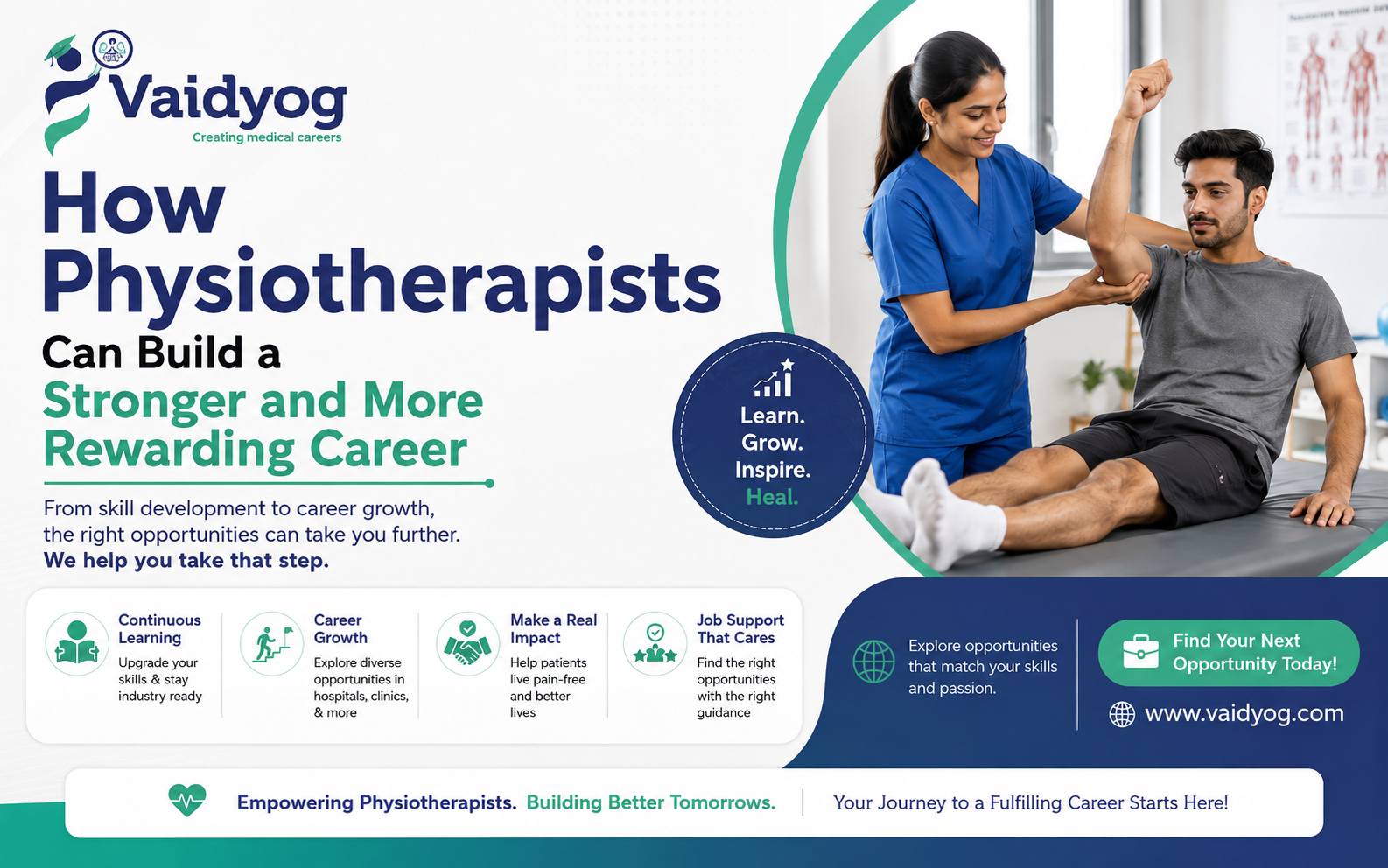
Physiotherapy is among the most fulfilling healthcare professions, providing physiotherapists an opportunity to make people mobile, relieve pain, help recover and improve their quality of life. With changes in the field of healthcare, physiotherapists have a chance to get involved in various healthcare facilities ranging from hospitals and rehabilitation centers to sports clinics and specialized facilities.
Yet, being a successful physiotherapist needs more than just medical knowledge. Specialized skills, practical experience, professional networking and knowledge of the latest trends in the healthcare field can help physiotherapists build a strong career.
Table of Contents
1.Understanding the Career Scope of Physiotherapy
2.Develop Strong Clinical Skills
3.Choose a Physiotherapy Specialization
4.Practical Experience
5.Keep Learning and Updating Your Skills
6.Build Strong Communication Skills
7.Create a Professional Profile
8.Explore Different Career Opportunities
9.Build a Strong Professional Network
1. Understanding the Career Scope of Physiotherapy
The scope of work of a physiotherapist goes beyond injury treatments. Physiotherapists have a significant contribution to make in areas like rehabilitation, prevention of disease, pain reduction, improved movement, and general physical wellbeing.
Based on the educational background and interests, physiotherapists may choose a career path in:
- Hospitals
- Multispecialty healthcare institutions
- Centers for rehabilitation and recovery
- Sports medicine clinics
- Orthopedics
- Neurology rehabilitation centers
- Aged care
- Pediatrics
- Home healthcare
- Corporate wellness
These career options will assist a professional to find out which one suits him/her most.
2. Develop Strong Clinical Skills
Clinical expertise forms the backbone of a thriving career in physiotherapy. Patients and employers seek health professionals who are able to properly assess a condition and design appropriate treatment regimes.
Physiotherapists must always endeavor to enhance their understanding of:
Assessment and evaluation of patients
Exercise therapy
Manual therapy
Pain management
Rehabilitation
Functional and mobility training
Injury prevention
Rehabilitation after surgery
Experience is key since it helps physiotherapists use their theoretical knowledge in practical situations.
3. Choose a Physiotherapy Specialization
Specialization will go a long way in enabling physiotherapists to distinguish themselves in a growing number of competitors in the healthcare sector.
Some common specializations include:
- Orthopedic physiotherapy
- Sports physiotherapy
- Neurological physiotherapy
- Pediatric physiotherapy
- Cardiopulmonary physiotherapy
- Geriatric physiotherapy
- Women’s health physiotherapy
- Musculoskeletal physiotherapy
Deciding on a particular specialization will be contingent on personal interests and professional aspirations.
A unique specialization will also give individuals the chance to be eligible for unique tasks and roles.
4. Gain Practical Experience
Experience is an important factor in developing careers. New graduates can start out searching for internships, clinical experience, entry-level positions, or even supervised positions.
Physiotherapists with experience can take up challenges such as:
Handling complicated patients
Creating customized rehabilitation programs
Supervising junior professionals
Coordinating with doctors and other medical practitioners
Patient teaching sessions
Clinical research
Even every patient encounter offers an opportunity to develop clinical reasoning skills and problem-solving skills
5.Keep Learning and Updating Your Skills
The healthcare industry is in constant flux, and physiotherapy is not immune. Innovations in rehabilitation methods, technology, research, and treatment continue to develop.
Physiotherapists can keep up with this trend through:
Attending seminars and conventions
Obtaining certifications
Reading medical and physiotherapy literature
Engaging in continuing education courses
Educating themselves on digital healthcare technology
Staying aware of developments in rehabilitation science
This continuous improvement shows professionalism on the part of the physiotherapist.
6. Build Strong Communication Skills
Clinical skills alone are not enough to guarantee success in a physiotherapy profession. Good communication helps build rapport between patients and health professionals.
Effective physiotherapist should be capable of:
Explaining the course of treatment to patients
Listening to the problems of patients
Motivating the patients during rehabilitation process
Communicating with other doctors and nurses
Educating the patients on exercises
Giving instructions for home exercises
Effective communication may help engage the patients.
7. Create a Professional Profile
An effective online professional profile may assist physiotherapists in becoming more prominent to potential employers, recruiters, healthcare institutions, and professional circles.
Effective elements of the professional profile include:
Education background
Clinical experience
Specializations
Qualifications
Skills
Internship training or experience
Professional accomplishments
Up-to-date contact details
The physiotherapists need to update their resume focusing on clinical skills and experience.
8. Explore Different Career Opportunities
No longer are physiotherapists confined to the traditional setting of hospitals. There are many new career options which have been brought about by the development of rehabilitation medicine, sports medicine, home care, wellness and digital medicine.
Some of the career options include:
Clinical Physiotherapist
Sports Physiotherapist
Rehabilitation Physiotherapist
Pediatric Physiotherapist
Neurological Physiotherapist
Home Care Physiotherapist
Physiotherapy Consultant
Rehabilitation Specialist
Physiotherapy Lecturer
Clinical Researcher
Career exploration helps the professional find opportunities that fit his or her strengths and career goals
9. Build a Strong Professional Network
Networking may be used as an essential element for identifying career paths and getting advice from fellow professionals.
The ways of building professional networking for physiotherapists may include:
Membership in professional organizations
Participation in healthcare conferences
Attending workshops
Connecting to other healthcare professionals via the Internet
Participation in professional communities
Reading physiotherapy-related materials
Networking with previous colleagues and mentors
Professional networking helps to get access to industry information, mentoring, collaboration, and career paths.
Conclusion
In order to make your physiotherapy career more successful and fulfilling, you need to learn consistently, gain practical experience, specialize in your area of interest, develop communication skills, and network professionally. Regardless of whether you are a beginner in the field or an experienced specialist, you will find new career opportunities through self-improvement and industry connections.
As the demand for rehabilitation and patient-focused services grows, so do different career opportunities for physiotherapists. Through development and exploration of available physiotherapist jobs, you may advance in your career.
FAQS
1. Is physiotherapy a career that one can pursue?
Yes. There exist many opportunities for one to pursue this profession because there is need for physiotherapy in hospitals, rehabilitation centers, sports clinics, home health care and wellness centers.
2. What skills are required of a physiotherapist?
Skills such as clinical assessment, exercise therapy, rehabilitation procedures, communication and critical thinking skills are necessary for success in the field of physiotherapy.
3. Should physiotherapists specialize in a certain field?
Specialization is not a must. However, specialization in areas like orthopedic, sports, neurological, pediatrics or geriatrics will give professionals an edge when seeking career development.
4. How can new graduates of physiotherapy get more exposure?
New graduates of physiotherapy should consider interning or clinical work in rehabilitation centers.