Clinical vs Non-Clinical Healthcare Jobs: Which Career Path Is Right for You?
The healthcare industry offers more career choices than just doctors and nurses. Today people can create fulfilling jobs in care, hospital management, technology, research, administration, operations and many other health roles. Knowing the difference between non‑clinical health jobs can help you pick a path that fits your skills, training, interests and future plans.
Table of Contents
- What Are Clinical Healthcare Jobs?
- Skills Needed for Clinical Careers
- What Are Non-Clinical Healthcare Jobs?
- Skills Needed for Non-Clinical Careers
- Clinical, vs Non- Healthcare Careers
- Can You Switch Between Career Paths?
- Future of Healthcare Careers
What Are Clinical Healthcare Jobs?
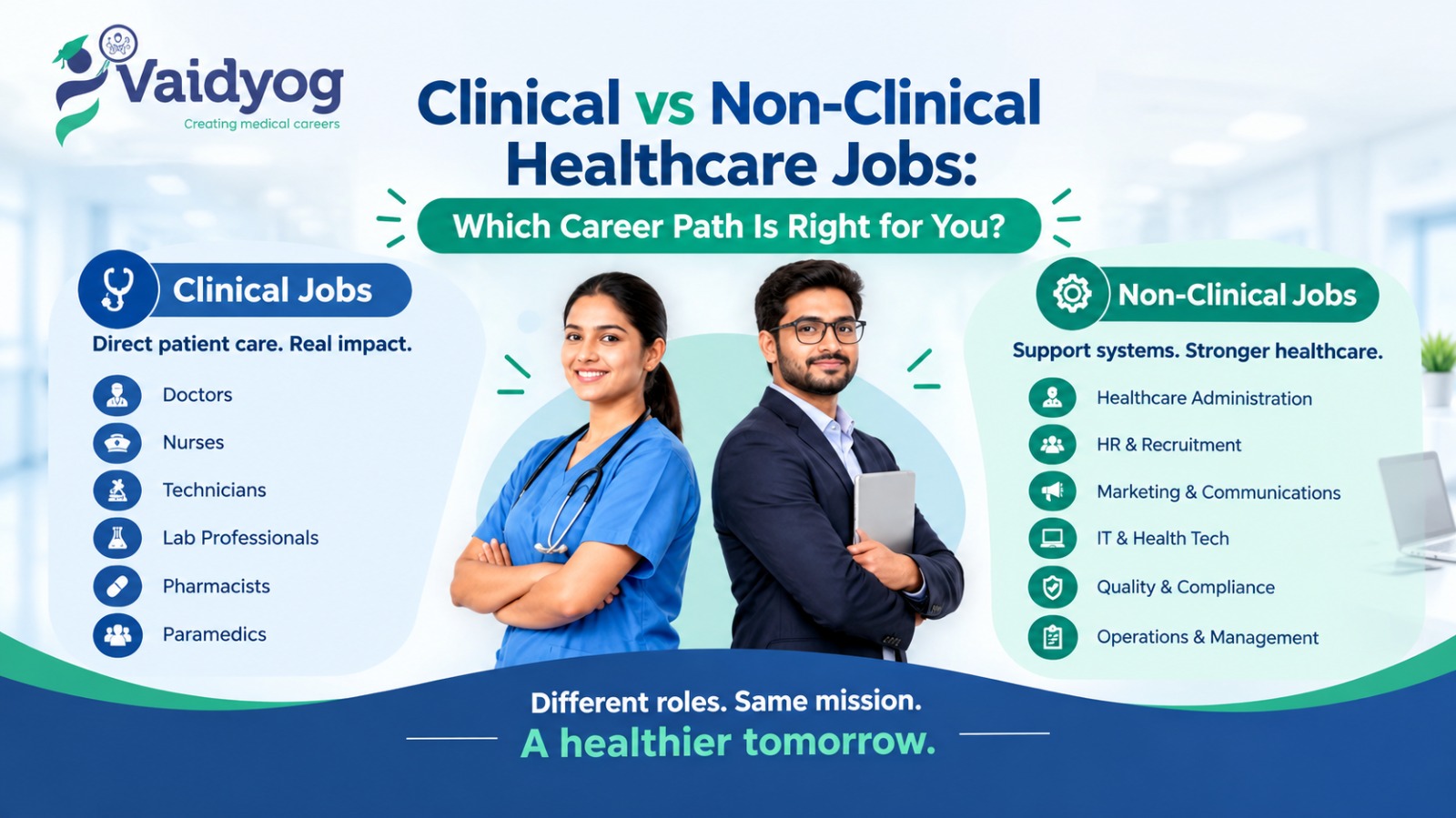
Clinical healthcare jobs involve contact with patients. People who work in these roles are usually responsible for diagnosing, treating, monitoring, rehabilitating or caring for patients. Clinical careers can be found in hospitals, clinics, laboratories, pharmacies, diagnostic centers and many other places that give health care.
Common clinical roles include:
- Doctors and medical specialists
- Nurses
- Physiotherapists
- Pharmacists
- Medical laboratory technicians
- Radiology technicians
- Occupational therapists
- Emergency professionals
- Other allied healthcare professionals
Clinical professionals play an important part in making patients healthier and in giving good health care services.
Skills Needed for Clinical Careers
careers need a mix of professional knowledge and people skills. Depending on the job people may need degrees, certificates, licenses and real training. Important skills are knowledge talking with people, empathy deciding fast paying close attention working with others and being able to work well when there is a lot of pressure. If you like talking with patients giving hands‑on care and helping patients get better a clinical career could be a fit.
What Are Non‑Clinical Healthcare Jobs?
Non‑clinical healthcare jobs help health care organizations. Do not mostly involve talking directly with patients. These people help hospitals, clinics, diagnostic centers, health care companies and other groups run smoothly.
Examples include:
- Healthcare administration
- Hospital operations
- Healthcare management
- coding
- Healthcare IT
- Medical writing
- Healthcare marketing
- Quality and compliance
- Healthcare data analysis
- Medical recruitment
- Health insurance and claims management
Non‑clinical professionals are also very important, to the health care system. Their work helps groups run better use resources well keep rules use technology well and give services.
Skills Needed for Non-Clinical Careers
clinical careers in healthcare can require different skill sets depending on the job. Important skills include management, communication, technology, data analysis, administration, business knowledge, project management and problem-solving. These abilities are often valuable across roles outside of direct patient care.
For instance someone who loves technology might look into healthcare IT or digital health. A person with organizational skills may consider hospital administration or operations.
These types of jobs can lead to work in healthcare environments healthcare companies, consulting firms and sometimes in remote or hybrid work settings.
Clinical vs Non-Clinical Healthcare Careers
Deciding between non-clinical careers depends on your personal interests and career goals.
Patient interaction: If you enjoy working with patients a clinical role may be the right choice. If you prefer supporting healthcare from behind the scenes non-clinical positions could be better.
Work style: Clinical professionals usually work in hospitals, clinics, labs or other medical sites. Non-clinical workers often work in offices, corporate settings, healthcare organizations or even remotely.
Qualifications: Clinical roles generally need education and professional training. Non-clinical jobs can have educational requirements depending on the position.
Career growth: Both routes offer chances to grow professionally—through specialization, leadership roles, higher education and ongoing development.
For organizations that want to build healthcare teams good medical staffing helps match qualified professionals with fitting roles, in all areas of healthcare.
Can You Switch Between Career Paths?
Yes. Healthcare professionals can move from work to non‑clinical work by learning new skills and getting extra qualifications.
For example a nurse could go into healthcare administration a pharmacist could try writing or management and a clinical professional could shift into healthcare technology, quality management or hospital operations.
Healthcare professionals who want allied health jobs can look at jobs that go beyond patient care by learning management, technology, research or administrative skills.
Future of Healthcare Careers
Healthcare is changing fast because of intelligence, telemedicine, digital health, healthcare analytics, automation and new ways of caring for patients. These changes bring chances for both clinical and non‑clinical professionals.
When healthcare organizations use technologies and make their work better healthcare professionals who mix healthcare knowledge with digital, analytical, management or communication skills can discover new career possibilities.
Conclusion
Both clinical and non‑clinical healthcare careers are vital for a healthcare system. Clinical professionals give patient care. Non‑clinical professionals help hospitals with management, technology, admin, operations and other key jobs.
The best career path is the one that matches your qualifications, strengths, interests and future goals. By learning about your options and by improving your skills over time you can build an sustainable healthcare career.
If you are looking for healthcare opportunities Vaidyog can help healthcare professionals find career options, in hospitals, clinics, healthcare organizations and other healthcare settings.
FAQ’S
1. What is the difference between non-clinical healthcare jobs?
Clinical roles focus on patient care, diagnosis, treatment or rehabilitation. Non-clinical roles support healthcare service with administration, technology, management, research, operations and other duties.
2. Are clinical healthcare careers good options?
Yes. Non‑clinical careers can offer opportunities in healthcare administration, information technology, coding, management, analytics, recruitment, marketing and other growing fields.
3. Can nurses move into clinical careers?
Yes. Nurses can learn skills and move into healthcare administration, quality management, hospital operations, education or healthcare technology.
4. Which healthcare career has opportunities?
There is no best career, for everyone. The right choice depends on your qualifications, interests, skills, preferred work environment and long‑term career goals.
5. Can allied healthcare professionals move into clinical roles?
Yes. With the experience and skill development allied healthcare professionals can explore healthcare operations, administration, quality, education, research and management.