Beyond Sales: The Strategic Role of a Medical Representative
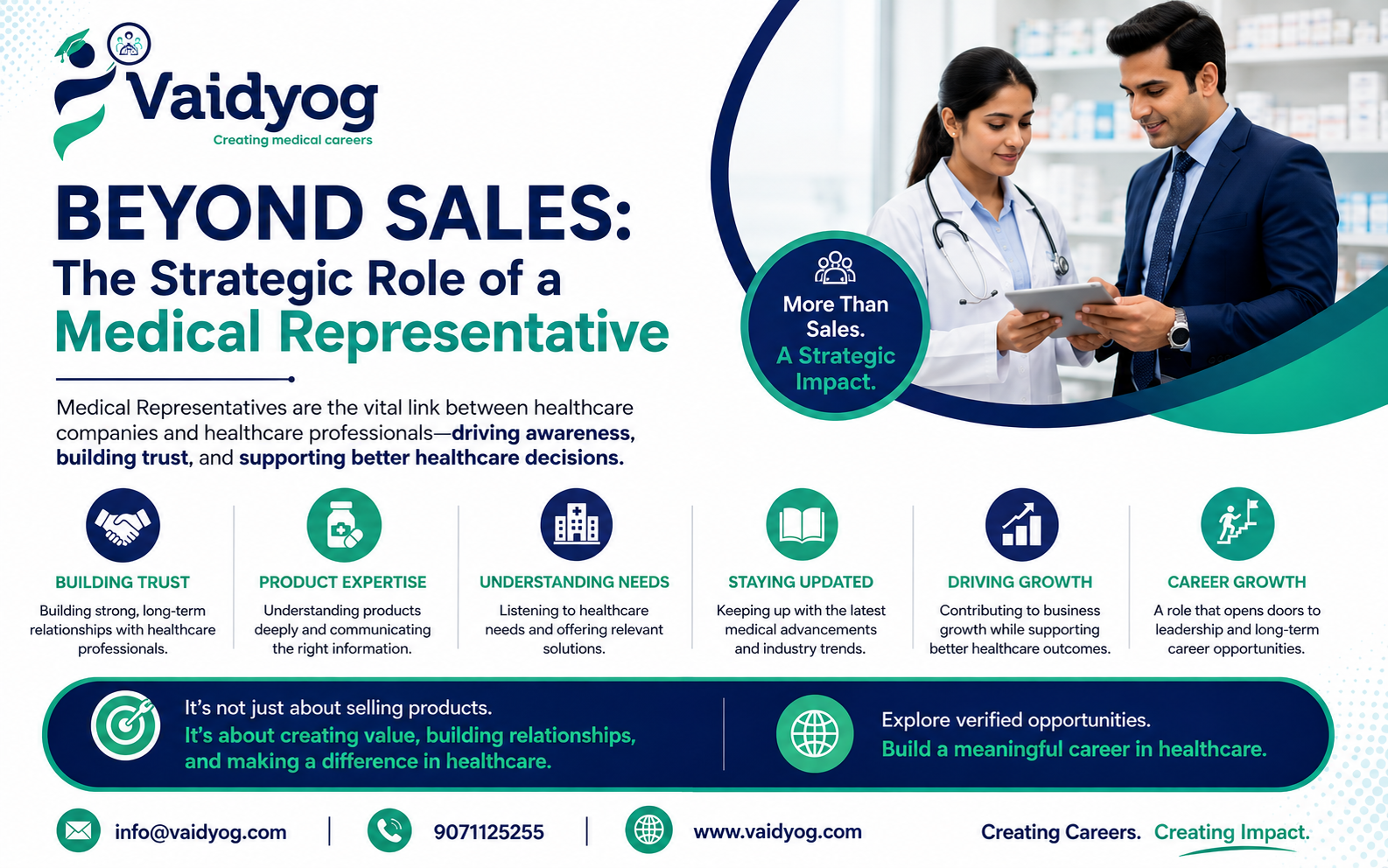
In most cases, when one thinks about the term Medical Representative, his or her mind usually gets associated with sales goals, product promotion, and doctor meetings. But being a medical representative is not only about sales activities.
Being a medical representative means performing many different tasks and functions, which include not only product knowledge but also effective communication, relationships management, market analysis, and business development.
Since the healthcare sector evolves every day, so does the job of a medical representative. Currently, one has to be familiar with products as well as needs of healthcare professionals.
Table of Contents
- What Does a Medical Representative Do?
- Why Medical Representatives Are More Than Sales Professionals
- Key Responsibilities of a Medical Representative
- Essential Skills for Medical Representative Careers
- How Technology Is Changing the Role
- Career Opportunities for Medical Representatives
- Why Choose a Career as a Medical Representative?
- Frequently Asked Questions
- Conclusion
What Does a Medical Representative Do?
Medical representatives serve as professional intermediaries connecting healthcare organizations with healthcare professionals. Their role may include representing healthcare organizations’ products which may include pharmaceuticals, medical equipment, healthcare technology, and many other healthcare solutions.
Common tasks performed by medical representatives may include the presentation of product information, establishment of professional relations, market requirements understanding, visiting healthcare organizations, and helping their organizations grow.
The main task of a good medical representative is not sales alone; they strive to provide valuable information and establish professional relations.
Why Medical Representatives Are More Than Sales Professionals
Sales definitely form a crucial element of the position, however, good medical representatives add value beyond achieving their sales objectives.
They help doctors learn about products and solutions and at the same time, provide the organization with useful information about the customer requirements and industry trends.
This makes the position an amalgamation of:
- Healthcare information and product knowledge
- Professional communication
- Customer relations management
- Market knowledge
- Business development
- Learning continuously
The ability to communicate clearly, responsibly, and professionally can make a significant difference in how healthcare products and solutions are understood.
Key Responsibilities of a Medical Representative
1. Building Professional Relationships
Medical reps frequently deal with doctors, pharmacists, hospitals, clinics, and other healthcare practitioners.
Trust building, relationship management, and expectation management are some of the key responsibilities of the job.
2. Understanding Products
Strong product knowledge is essential for a medical representative. Professionals need to understand the:
- Features of products
- Applications and uses
- Benefits and limitations
- Relevant product information
- Appropriate customer requirements
Accurate communication helps healthcare professionals make better-informed decisions about products and solutions.
3. Understanding Healthcare Needs
Different hospitals, clinics, doctors, and health care organizations will always have different requirements.
To understand these and provide relevant solutions to them, medical representatives must have good communication skills.
Unlike taking a blanket approach, effective representatives try to create value for their customers.
4. Staying Updated With Healthcare Developments
The field of health care is always changing. There are changes in technology, products, regulatory aspects, approaches to treatment, and the market.
Continuous learning ensures that the medical representative is well-informed and able to speak to health care professionals.
5. Supporting Business Growth
Selling is still an important task; however, for sustainable business growth, there are other elements involved.
These include customer relations, market knowledge, customer engagement, territory management, and proper communication.
Essential Skills for Medical Representative Careers
The successful medical representative is one that possesses the skills of healthcare literacy, business literacy, and interpersonal skills.
Important skills include:
- Strong communication skills
- Product and industry knowledge
- Relationship management
- Presentation skills
- Active listening
- Negotiation abilities
- Time management
- Territory management
- Adaptability
- Goal-oriented thinking
- Problem-solving
- Continuous learning
- Digital and CRM skills
By cultivating these skills, professionals can move on to become senior sales executives, territorial managers, business developers, key account managers, and sales leaders.
How Technology Is Changing the Role of Medical Representatives
The healthcare industry is becoming increasingly digital and information-driven. As a result, the traditional field-based role of medical representatives is also evolving.
Today, medical representatives may use:
- CRM platforms
- Digital communication tools
- Virtual meetings
- Online product presentations
- Data-driven sales strategies
- Digital marketing resources
- Customer analytics
Technology can help representatives organize customer information, manage interactions, track sales activities, and make more informed business decisions.
The modern medical representative therefore needs to be comfortable with both people and technology.
Combining healthcare knowledge, relationship building, digital skills, and business understanding can create a stronger foundation for career growth.
Career Opportunities for Medical Representatives
Medical representative experience can provide professionals with valuable exposure to the healthcare and business environment.
With experience and continuous skill development, professionals may explore career paths such as:
- Senior Medical Representative
- Area Sales Manager
- Territory Sales Manager
- Business Development Executive
- Key Account Manager
- Product Specialist
- Medical Device Sales Professional
- Healthcare Technology Sales Professional
- Sales Manager
- Business Development Manager
The exact career path depends on an individual's qualifications, experience, skills, and organization.
Why Choose a Career as a Medical Representative?
For individuals interested in healthcare but looking for a career outside direct clinical practice, medical representative roles can offer valuable professional exposure.
The position can provide experience in:
- Healthcare organizations
- Pharmaceutical and medical device products
- Customer relationship management
- Sales and business development
- Healthcare market dynamics
- Professional communication
- Territory management
It can also help professionals develop transferable skills that are useful across different areas of the healthcare industry.
For individuals who enjoy communication, networking, business development, and healthcare, this career can be an attractive option.
Conclusion
A medical representative is more than a salesperson. The role brings together healthcare knowledge, communication, relationship management, technology, and business strategy to create value for healthcare professionals and the organizations they represent.
As the healthcare industry continues to evolve, professionals who combine industry knowledge with strong communication, digital capabilities, and customer-focused thinking can build rewarding career paths.
If you are exploring medical representative jobs and other verified healthcare career opportunities, VAIDYOG can help connect job seekers with opportunities across the healthcare industry and support their journey toward meaningful career growth.
Frequently Asked Questions About Medical Representative Careers
1. What does a medical representative do?
A medical representative communicates product information to healthcare professionals, builds professional relationships, understands customer requirements, manages assigned territories, and contributes to business growth.
2. Is a medical representative only responsible for sales?
No. Although sales are an important responsibility, the role also involves product education, relationship management, customer engagement, market understanding, and continuous learning.
3. What skills are required to become a medical representative?
Important skills include communication, product knowledge, presentation, negotiation, relationship management, time management, adaptability, and digital skills.
4. Is a medical representative a good career option?
It can be a good career option for individuals interested in healthcare, communication, sales, networking, and business development. Career progression can lead to senior sales, management, business development, and key account roles.
5. How can medical representatives advance their careers?
Professionals can advance by developing product expertise, improving communication and sales skills, learning CRM and digital tools, understanding healthcare markets, and gaining experience in territory and customer management.
6. Can medical representatives move into other healthcare careers?
Yes. Depending on their experience and qualifications, medical representatives can explore opportunities in pharmaceutical sales, medical devices, healthcare technology, business development, key account management, product management, and sales leadership.